
Self neglect and hoarding
-
Introduction
Open or CloseIntroduction
One of the most common themes within adult safeguarding relates to self-neglect, especially where it impacts on an individual’s health and wellbeing.
It is also one of the most challenging areas as people who self-neglect may not be aware of the level or extent of their self-neglect and may prefer not to engage with professionals. In these situations, practitioners need to balance actions that respect an individual’s rights and wishes with actions needed to keep an individual and those around them safe.
Whilst self-neglect and hoarding are often defined together it is important to recognise that these can also occur in isolation from each other.
However, unlike all other forms of safeguarding abuse, self-neglect and hoarding have a key factor in common as they do not involve a perpetrator. This means that successful support is all about the ability to engage and build a rapport with the individual, explore their lived experience and develop trusting relationships that both empower and enable them to feel safe.
To help with this the following resources include practical guides to help start conversations with people who prefer not to access help and support and well as legislation that can be used to help keep people safe.
-
Definition of Self Neglect
Open or CloseDefinition of Self Neglect
The Care Act statutory guidance (2014) defines self-neglect as ‘a wide range of behaviours including neglecting to care for one’s personal hygiene, health or surroundings and can be a long-standing situation or recent. It can also include behaviour such as hoarding’.
Professionals need to get the balance right between respecting an individual’s right and choice, with what can become a serious risk to self and others. Self-neglect can have a serious impact on an individual’s health and wellbeing, as well as impacting on wider family, friends and community.
Understanding the cause of the self-neglect is key. There are many reasons why people self-neglect and some adults will experience more one risk factor including:
TRAUMA
Trauma and traumatic life changes, including adverse childhood experiences, domestic abuse, removal of a child, bereavement. These factors can impact on motivation and loss of interest in the future.
MENTAL HEALTH
Poor mental health which may include obsessive compulsive disorders or hoarding disorder, depression and /or anxiety, schizophrenia, psychosis. These factors can impact on decision making and motivation.
PHYSICAL HEALTH
Physical health issues including frailty, diabetes, COPD, mobility issues, poorly managed pain or traumatic injury. These factors can impact on mobility, energy levels, attention span, organisational skills or motivation.
CONGNITION
Such as a brain injury, learning disability, dementia, Korsakoff’s Syndrome. These factors can impact decision making, executive functioning and mental capacity.
NEURODIVERGENCE
Such as autism, ADHD, dyspraxia, bipolar disorder. These factors can impact on the way people process information and make decisions.
SUBSTANCE USE
Substance use and dependency involving alcohol, prescription drugs or illegal drugs. These factors can impact on executive functioning and decision making.
Where an adult declines support organisations should always consider the wellbeing of the adult and those around them.
Section 1 of the Care Act highlights the need to consider someone’s wider wellbeing in relation to self-neglect for adults with long term health conditions or older people who may have care and support needs. Adults who are willing to accept help can be referred to Adult Social Care for a Social Care Assessment.
-
Definition of Hoarding
Open or CloseDefinition of Hoarding
The World Health organisation (2018) describes hoarding as a medical condition characterised by:
“ the accumulation of possessions due to excessive acquisition of, or difficulty discarding, possessions, regardless of their actual value. Excessive acquisition is characterized by repetitive urges or behaviours related to amassing or buying items. Difficulty discarding possessions is characterized by a perceived need to save items and distress associated with discarding them. Accumulation of possessions results in living spaces becoming cluttered to the point that their use or safety is compromised. The symptoms result in significant distress or significant impairment in personal, family, social, educational, occupational or other important areas of functioning.”
Added to the distress an individual may feel about their situation, hoarding can also impact on those around them, including others living in or visiting the property.
Hoarding can be a form of self-neglect behaviour but isn’t always linked and can often be a condition by itself or a symptom of other mental health issues.
Understanding the reasons why someone may be hoarding is key and some adults may experience more than one risk factor including:
TRAUMA
Trauma and traumatic life changes, including adverse childhood experiences, domestic abuse, removal of a child, bereavement. These factors can result in items taking on significant meaning, making it hard to discard them
MENTAL HEALTH
Poor mental health which may include obsessive compulsive disorders or hoarding disorder, depression and/or anxiety, schizophrenia, psychosis. These factors can impact on decision making and ability to let go of items.
PHYSICAL HEALTH
Physical health issues including frailty, diabetes, COPD, mobility issues. These factors can impact on mobility, energy levels, organisational skills resulting in difficulties managing and clearing things they have accumulated.
CONGNITION
Such as a brain injury, learning disability, dementia, Korsakoff’s Syndrome. These factors can impact decision making and understanding of how to dispose of items.
Often, difficulty with decision making and not being able to break a task down into smaller steps can mean that the process of clearing hoarded items is overwhelming for the person and so avoided.
For individuals living with a medically recognised Hoarding Disorder it is important to recognise that the removal of items can cause further mental distress and, in some instances, make hoarding worse over time.
Neighbouring properties can also be affected by habitation dangers such as fire risk due to combustion dangers, structural dangers due to overloading of floors, and problems due to insects and rodent infestation.
When does Hoarding become a problem?
According to the NHS, Hoarding is considered to be a significant problem if:
- The amount of clutter interferes with everyday living – for example, the person is unable to use their kitchen or bathroom and cannot access rooms;
- The clutter is causing significant distress or negatively affecting the person's quality of life or their family's – for example, they become upset if someone tries to clear the clutter and their relationships with others suffer
In some circumstances, hoarding can create risk to the person hoarding and others as it can lead to:
- Rodent or insect infestations
- Fire risk due to flammability of the hoard or blocking of exit routes
- Increased risk of trips and falls
- Items causing harm by falling on the person
Understanding Hoarding Risks
When working with someone that may have hoarding behaviours, the following Hoarder Insight Tool can be helpful to explore how an individual views and understands their individual circumstances.
Good or fair insight
The person recognises that hoarding-related beliefs and behaviour (such as difficulty discarding items, clutter or excessive acquisition) are problematic. The person recognises these behaviours in themselves.
Poor insight
The person is mostly convinced that hoarding-related beliefs and behaviours (relating to difficulty discarding items, clutter or excessive acquisition) are not problematic despite evidence to the contrary. The person might recognise a storage problem but has little self-recognition or acceptance of their own hoarding behaviour.
Absence of insight
The person is convinced that hoarding-related beliefs and behaviours (relating to difficulty discarding items, clutter or excessive acquisitions) are not problematic despite evidence to the contrary. The person is accepting of their living environment despite the level of hoarding and do not recognise the potential risks to health.
Detached with assigned blame
The person has been away from their property for an extended period. The person has formed a detachment from the hoarded property and is now convinced a 3rd party is to blame for the condition of the property.
-
Identifying Self Neglect and Hoarding
Open or CloseIdentifying Self Neglect and Hoarding
Self-Neglect
Recognising the early signs of self-neglect can prevent someone’s situation becoming a problem.
Self-neglect research by Braye et al. (2011) highlights the following early signs and indicators that professionals should consider. Some people may experience more than one indicator:
- Living in very unclean home environment e.g. build-up of rubbish, dirt or waste; property in disrepair; hoarding of items, vermin.
- Physical or health needs not adequately cared for, causing health to deteriorate.
- Lack of self-care e.g. neglect of personal hygiene, nutrition, hydration.
- Not attending medical appointments and/or prescribed medication being declined.
- Inadequate diet and nutrition, which impacts on the individual’s health and wellbeing.
- Social contacts not being maintained, resulting in isolation .
- Finances not being managed and no assistance being sought.
- Refusing to allow access to health and/or social care staff in relation to care needs, health needs or property maintenance, or unwilling to attend appointments with services that could help.
- mistrust of professionals/people in authority.
Hoarding
The following signs and behaviours also provide some useful indicators of hoarding:
- Refusing home visits from professionals in favour of office-based appointments.
- Refusing to answer the door to professional visiting the home.
- Property is very ‘cluttered’ and rooms cannot be used for intended purpose.
- Collecting items that have little or no monetary value that the person is extremely attached to.
- Struggling to manage everyday tasks such as cooking, cleaning and paying bills.
- An individual’s physical appearance may appear unkempt and dishevelled due to lack of toileting or washing facilities in the home.
- The property being a source of complaints by neighbours about vermin.
- Complaints by neighbours about excessive number of pets creating hygiene issues, smells and noise.
- Property is falling into disrepair and becoming a health hazard.
-
Safeguarding Principles and Making Safeguarding Personal
Open or CloseSafeguarding Principles and Making Safeguarding Personal
Where there is evidence of escalating risk, professionals should consider the six safeguarding principles as part of their risk assessment and planned response.
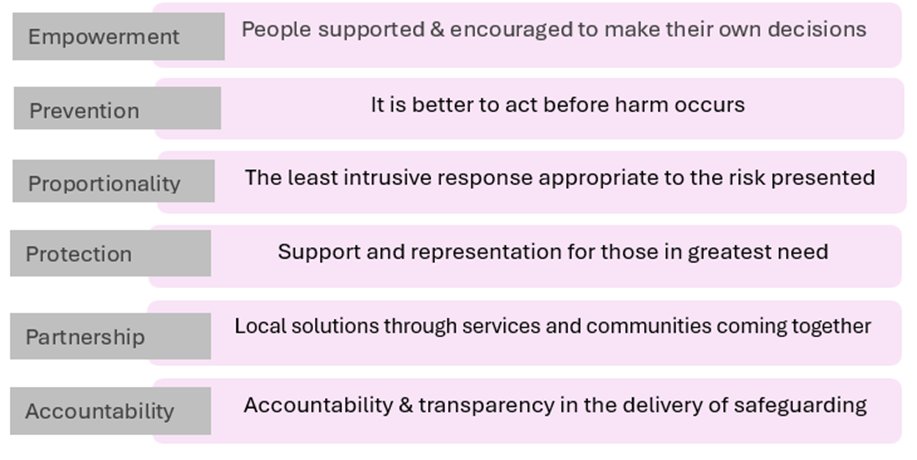
These principles also form the basis for applying Making Safeguarding Personal (MSP) approaches which recognise that adopting a ‘one size fits all’ to safeguarding does not work, but focuses instead on:
- Understanding an individual’s unique circumstances, strengths and support networks.
- Balancing the individuals’ human rights whilst working with them to identify the least restrictive solutions.
- Providing accessible information to help people make informed decisions about how to remain safe.
- Respecting their background, culture, lifestyle, personal histories, interests, and likes and dislikes.
- Communicating effectively with them to identify ways forward, including them in decision making wherever possible.
- Ensuring that they continue to feel in control of their situation.
-
Starting the Conversation
Open or CloseStarting the Conversation
Even if you’re not likely to play a major role in the person’s ‘support journey’, you can start to develop a good relationship with the person before brokering the next set of conversations with another service. However, practitioners often find that the first contacts can be the hardest.
Past experiences may mean the person mistrusts services or authority. Start by establishing rapport and talk about interests, histories and stories, rather than focusing on immediate problems or enforcement. The aim is to try to build a relationship and engage with them to try and understand if there are underlying causes for their behaviours i.e. bereavement, trauma, significant events in their life or a physical disability.
Key things to consider:
- Find the right person: think about who is best placed to make the first contact and act as a bridge to help you develop the relationship (GP, housing contact, fire service).
- Start with practicalities: providing practical help with small tasks at the outset may help build trust (offer to help with a food parcel etc).
- Find something that motivates them: seek to understand the individual’s interests and history and make links with these.
- Work with family, friends or carers if possible, or get some advice from the Hoarders Helping Hoarders Peer Support group mcchshousingsupport@manchester.gov.uk
First Contact:
- Can you ask the GP to write a letter to say you will be visiting?
- Would they like to bring a friend or have a friend present when you visit?
- Can a family member or neighbour introduce you?
- Equally - be discrete, sometimes a person doesn’t want to lose face with their neighbours - don’t wear your work ID badge.
- Think about any other services who are likely to have contact with the person, such as the fire service, housing, utility companies, community nurse. Can you do a joint visit?
- Can you enlist the help of faith, voluntary or community support groups?
- Can you make an appointment by phone or letter, rather than just turning up?
- Can you build rapport on the phone before the visit?
First impressions count:
From the first moment you enter someone’s home, every interaction is important and your reactions and responses matter.
Offer a compliment on entry, on anything; or ask a question to show interest and start a general conversation – make a connection, however small.
Small comments, looks, expressions and body language can be noticed by those you are visiting and make them feel that they are being judged or cause them offence – this can make a massive difference to how they feel and affect you ability to build a rapport.
If there are pets, it may be that the welfare of the pet is more important to the person than themselves - ask about the pet, show an interest.
Remember contact is about social interaction - if they offer a cup of tea etc, try and say yes, if you don’t drink what they offer perhaps ask for a glass of water instead.
Sit down wherever possible, it helps when having a conversation to be on the same level – standing can make it obvious that you feel it’s too cluttered or dirty.
Try not to make any judgement obvious, whatever you are feeling or thinking.
Other helpful resources include the TSAB Guide on Professional Curiosity
Five top tips to support you to have difficult conversations
- Preparation – jot down key points in priority order in advance as this will act as a prompt when you are with the person – see the list of questions in the next section on Working With Risk.
- Specifics are important – have one to two detailed examples of how support can be provided to reduce risk(s), take different formats of information which are accessible to support conversations.
- Environment is important – the type of space you use to engage with the person can have an impact on how the conversation goes, consider alternative environments to have a good conversation i.e. ask they person where they feel most comfortable meeting with you or if they don’t want you to visit their home suggest alternatives likes local coffee shop or walk and talk.
- Silence is golden – when you have provided the information then stop and allow the person to reflect and take it in. Don’t rush the conversation, take time to listen to what they are saying.
- Put yourself in their shoes – how would you feel to hear the information you have provided to the person and more importantly remember what language you use, don’t use jargon.
Conversations about Hoarding
Once you have made a connection THEN try to gently explore the person’s relationship with or attachment to their belongings.
For example:
- Start by asking the person to choose an item of great value to them (they define ‘value’ in any way they like) and something they would be extremely reluctant to discard or give away. Ask them to tell you the story around the item.
- When you have developed that initial rapport demonstrate Compassionate Curiosity for example ASK: “What HAPPENED to you?” or “I’d like to hear a part of what happened to you in your life if you wouldn’t mind telling me please?” (or similar!)
- Ask the person to think back to a time before their environment became problematic for them and ask what they miss most – it’s another conversation starter but can give you and them some kind of a future ‘goal’ to aim for.
- Keep the focus on their personal strengths and opportunities as far as possible. Many will have shown real resilience coping with the circumstances that has resulted in their hoarding behaviour and will feel valued if this is recognised by those wanting to support them.
- Try to avoid using threats or the language of enforcement, these create negativity, anxiety and can lead to closed doors.
- The term ‘self-neglect’ can be a very stigmatising and emotive term – be careful how you use it.
Avoid setting goals or making plans until you have a shared/agreed understanding of the issues involved. Go at their pace - moving slowly and don’t force things; this may mean talking about other things until the individual is ready to talk about their situation. It may take several visits before they are ready to start thinking about goals.
This is also the key time to consider if there are risks to anyone else living in the property, such as young person and/or adult children, and to check if they are involved with any other professionals. See the section on Family, Carers and Advocates.
For more helpful information Tameside and Salford Hoarders Peer Support group have kindly consented to share their practical guide for people supporting or living with adults who exhibit hoarding behaviours TASPB-Tameside-Hoarder-Guide.pdf
-
Working with Risk
Open or CloseWorking with Risk
The assessment and management of risk alongside an individual, their carer or advocate is essential to determining if the individual can see both the risks and benefits associated with the risk, and to inform their decision making. This includes understanding the risk to themselves and to those around them.
Risk Assessment
Risk assessment involves:
- The identification of known or potential hazards, circumstances, relationships
- Analysis of the impact/severity and consequences of the risk to the individual or others around them
- Analysis of the likelihood that the risk will occur
Contact other services to start a multi-agency risk management approach by sharing information to gain a full picture of all the risks and set up a Team Around the Adult meeting to develop a shared risk management plan.
Having a shared multi-agency understanding of the nature and degree of an individual’s risk factors, who is at risk, the likelihood of occurrence, the severity of impact of a risk, and the context in which the risk occurs, supports practitioners to hold informed conversations with individuals at risk.
Each agency involved with the adult should, as part of their own case management arrangements, maintain a chronology of key events and complete and document their internal risk assessment and management plan.
As a starting point it can help to think about the following aspects of the situation:
Observe the home situation and environmental factors
Consider their engagement in daily living activities.
Do they have any underlying medical conditions?
Are there any underlying mental health conditions or substance use issues.
Are their concerns about Mental Capacity?
Executive functioning – do they seem to carry out the things they say they will/want to do?
Are there any internal or external factors that hinder them from carrying out their decisions, including domestic abuse, coercion or exploitation
Is the evidence of neurodivergence with the adult living with Autism and or ADHD?
Are there any concerns about money management and budgeting?
Has a Care Act assessment been conducted to consider domiciliary care support or other services?
Do they have any issues with their tenancy or are they at risk of homelessness?
If care has been offered, how are they engaging in their care and support plans.
What are their fears and concerns?
What is their understanding of any immediate risks?
What is their support network – do they have any family or friendship networks who can advocate for them?
Is there any neighbourhood visiting by voluntary organisations?
What is the impact of the situation on the individual?
What is the impact of the situation on others – any risks to wider family or the public?
If there is hoarding in the property it may help to ask the following questions:
Questions
Answers
How do you get in and out of your property? Do you feel safe living there?
Have you made your home safer to prevent accidents from happening ?
How do you move safely around your home (where the floor is uneven or covered, or there are exposed wires, dap, rot or other hazards)?
Has a fire ever started by accident?
How do you get hot water, lighting, heating in here? Do these services work properly? Have they ever been tested?
Do you ever use candles or an open flame to heat and light here or cook with camping gas?
How do you manage to keep yourself warm, especially in Winter?
When did you last go out into your garden? Do you feel safe to go out there?
Are you worried about other people getting into your garden to try and break in? Has this ever happened?
Are you worried about mice, rats or foxes, or other pests? Do you leave food out for them? Have you ever seen mice or rats in your home? Have they eaten any of your food they, got upstairs and could they be nesting anywhere?
Can you prepare food, cook and wash up in your kitchen? Do you use your fridge? Can I have a look in it? How do you keep things cold in the hot weather?
How do you keep yourself clean? Can I see your bathroom? Are you able to use your bathroom and use the toilet okay? Are you able to have a wash / bath / shower?
Can you show me where you sleep and let me see your upstairs rooms? Are the stairs safe to walk up? (if there are any stairs)
Do you have a washing machine?
How do you keep yourself warm at night? Have you got extra blankets / covers to put on your bed if you are cold?
Are there any broken windows in your home? Are there any repairs that need to be done?
Because of the number of possessions you have, do you find it difficult to use some rooms? If so, which ones?
Do you struggle with discarding (or recycling, selling, giving away) ordinary things that other people would get rid of?
The Trafford Multi-Agency Risk Management (MARM) Practitioners Toolkit provides a range of practical resources, including a risk management template and guidance for chairing multi-agency meetings.
Remember to work at the pace of the adult and don’t try to tackle multiple areas of risk in one go.
If the risk assessment highlights circumstances or risks which would be more appropriately dealt with under another process such as a Care Act Assessment or referral for Adult Safeguarding – please see the section on Referring to Services for more information.
Risk Enablement
It is important to recognise that all risk cannot be removed, all harm cannot be prevented from taking place and that some risk taking can have positive outcomes. Working with risk can be very challenging for professionals working to balance an individual’s human rights and enabling acceptable risk with their professional duty of care to keep people safe.
Risk enablement should be a core part of placing people at the centre of their own care and support and consider:
- Individual strengths which may help to reduce risks.
- Balancing risk between an individual’s wishes and their human rights and the safety of those around them.
- Potential impact - the physical, psychological, and emotional impact to the individual of taking or not taking a risk. This includes the concept of positive risk taking to support the independence and autonomy of the individual at the centre of practice.
- Individual histories - the context including previous and current risk-taking behaviours, previous and current external sources of risk, the ability of the individual’s support network to cope with risk taking.
- Executive functioning - working proactively with the individual to look at patterns beyond the immediate crisis to understand wider executive functioning.
- Probability - considering timescales, external factors, and the significance of a potential outcome. Risk management plans should be flexible and responsive to changes.
- Risk minimisation – this is when the risk of harm in your mind is minimised due to factors such as burnout, unconscious bias, or compassion fatigue. Unconscious bias due to an individual’s repeated distressed behaviour can lead to a focus on select information rather than the whole picture. It is a very natural human trait and regular reflection, case discussion, supervision, peer, and managerial support are all there to assist practice.
Risk Management
Risk Management should be a living process with regular reviews to consider changes in a person’s situation.
Multi-agency decisions, and the reasons behind them, should be clearly documented, with multi-agency meetings reconvening to consider progress and to review the plan. The Risk Management Plan should include details of all the relevant legislation being applied in the situation (see the section on relevant legislation). Where key agencies repeatedly fail to engage in the risk assessment and management process, the MARM escalation pathway (to be added) should be followed.
If someone chooses not to engage, agencies should not withdraw from supporting the adult without a formal multi-agency discussion and completing a risk assessment. Please see the section on Working with adults who are reluctant to engage.
-
Working with Adults Reluctant to Engage
Open or CloseWorking with Adults Reluctant to Engage
Self-neglect and hoarding often involves situations where an individual declines support which could help to improve their situation. This can be due to previous experiences, past trauma or a desire to remain independent.
If an adult at risk of harm due to self-neglect and/or hoarding refuses support, it is important to understand what their concerns are and to be honest with them about the risks involved. In these circumstances the following should be considered:
- Professionals should try to engage with the adult as much as they can; be persistent without causing distress and understand their limits to intervention if the individual does not wish to engage.
- Where there are concerns about mental capacity a referral should be made to Adult Social Care for an assessment to be conducted.
- Where someone is assessed as not having capacity in relation to relevant decisions, actions should be taken in the persons best interests and in accordance with the Mental Capacity Act 2005.
- Where someone does not wish to engage with services, and has the capacity to make this decision, any actions should be proportionate to the risk and in line with Article 8 of the Human Rights Act 1998 and consider the safety of those around them.
- Understanding the individual involves trying to understand why the person is reluctant or unwilling to seek or accept support. See the section on Starting the Conversation.
When an adult refuses to engage this may require agencies to be flexible in their approach. Professionals should follow guidance set out in the TSAB Multi Agency Risk Management (MARM) Framework and consider the different legislation that can help depending on the situation – see the section on Legal Frameworks.
Before disengaging with someone who declines support or services:
- Identify any risks (or worries) that require immediate action – what is the duration and seriousness of the self-neglect.
- Consider if the individual has been provided with all the necessary information in a format they can understand.
- Assess the risk as far as is possible given the individual’s limited engagement. Be open and honest; share concerns about these risks with the individual self-neglecting.
- Consider if there are any wider protective characteristics that require reasonable adjustments or any cultural needs factors to consider. More information about protected characteristics can be found in this short video Protected characteristics.
- Check out your concerns with other relevant agencies, hold a strategy meeting where appropriate to discuss options for escalating to the Complex and High Risk Panel (link to be added) before considering closure.
- Consider who (whether family, advocate, other professional) can support engagement with the individual. You may not be the best person.
- Formally record decisions, actions, attempts to engage and the individual’s responses.
Resolving multi-agency disagreements
If there is a difference of opinion between agencies about the right approach or eligibility thresholds for support, the TSAB Escalation Protocol provides guidance for practitioners to help resolve or escalate a concern. More information can be found here Multi Agency Escalation Protocol.
-
Think Family, Carers and Advocates
Open or CloseThink Family, Carers and Advocates
Self-neglect and hoarding behaviours can impact on other adults or children who live in the same household. It can also impact on those who care for adults who are self-neglecting or hoarding and impact on the care of children or other adults at risk living in the property.
It is important that practitioners think family – and think household - when considering responses to self-neglect and hoarding behaviours.
Hoarding impact on children and young people
Evidence suggests that growing up in a hoarded property can put a child at risk by affecting their development and can lead to parental neglect, which is a child safeguarding issue.
It is important to assess the risk of harm or neglect for any others living in the property and where a child is at immediate risk of harm, call the police on 999, alternatively if it’s a safeguarding concern send a Safeguarding Children referral to Trafford Council’s First Response using the online referral form Trafford Children's First Response.
Even where there are no immediate concerns for a child living in the property, it is important to recognise that growing up in a hoarded property can also become an intergenerational issue, starting in the teenage years and becoming more acute as people get older.
Hoarding impact on adults at risk
An adult with long term care and support needs may also be at risk if they are living in the property with a person who is self-neglecting and/or hoarding.
There may be a safeguarding concern about the adult if they are at risk of harm due to the way the person who is self-neglecting or hoarding is choosing to live in the property. Referrals for the adult at risk should be made to Trafford Adult Social Care using the online referral form ASC Referral Form.
Hoarding and carers
If a child, young person or adult living in the property has a caring role (whether for an adult or another child), a referral should be made for a carer’s assessment to be completed by using the following link Make a Referral.
Useful Contacts
Trafford Council Adult Social Care
0161 912 5199
Care Act Assessment to Social care support | Trafford Council
Trafford Council Adult Social Care - safeguarding
0161 912 5199
Trafford Council Children’s Social Care - safeguarding
0161 912 5125
Advocacy Focus
Trafford Carers Centre
0161 848 2400
-
Considering Mental Capacity
Open or CloseConsidering Mental Capacity
Some people who self-neglect or hoard may struggle to make decisions for themselves, and in these cases, professionals need to consider mental capacity.
The Mental Capacity Act 2005 Principles
The Mental Capacity Act 2005 is underpinned by the following five principles. The first three principles support the process of determining whether someone lacks capacity.
If it is decided that someone lacks capacity in relation to a specific decision, then principle 4 and 5 support the decision-making process.
- A person must be assumed to have capacity unless it is established that he lacks capacity.
- A person is not to be treated as unable to make a decision unless all practicable steps to help him to do so have been taken without success.
- A person is not to be treated as unable to make a decision merely because he makes an unwise decision.
- An act done, or decision made, under this Act for or on behalf of a person who lacks capacity must be done, or made, in their best interests.
- Before the act is done, or the decision is made, regard must be had to whether the purpose for which it is needed can be as effectively achieved in a way that is less restrictive of the person's rights and freedom of action.
Assessing Mental Capacity
Mental capacity assessments must determine whether the person can:
- understand the information relevant to the decision
- retain that information (long enough to make the decision)
- use or weigh that information as part of the process to make a choice
- communicate their decision (whether by talking, using sign language or any other means)
Self-neglect is often characterised by a gradual decline in wellbeing so repeating and documenting capacity assessments that evidence the extent to which clients truly understand the future consequences of their decisions is extremely important.
Where the adult declines support and they have been assessed as having the mental capacity to understand the consequences of such actions, this should be fully recorded.
Professionals should also include a record of the efforts and actions taken by all agencies involved to provide support and confirmation that they have considered alternative means to help explain the consequences. There should be plans in place to monitor and review risks and reconsider actions should risks escalate.
Further information is available in the MCA code of practice.
Unwise Decisions
The Mental Capacity Act (MCA) states that a person is not to be treated as unable to make a decision or that they lack capacity merely because they make an unwise decision. Instead, the decisions should be considered alongside the risks and consequences as part of the capacity assessment.
Executive Functioning
Executive functioning should be considered where a person gives clear answers to questions, but their actions suggest that they are unable to translate this into practice. Mental capacity involves not only the ability to understand the consequences of a decision, but also the ability to execute, or carry out, the decision.
A simple way to demonstrate this is to use ‘tell me/show me’ approaches. Ask the person to tell you how they would respond and then ask them to show you how they do it.
Here are some suggestions from practitioners about how this could be done:
- You need to observe the person’s practical ability to complete actions relating to a decision such as cleaning, shopping or cooking. For example, a person may say they are able to make meals, no problem, but you can’t see any evidence that meals are being prepared or cooking done. You could ask them to show you how they make a cup of tea, or a slice of toast.
- Sometimes, people have physical difficulties with completing an action. For example, a person may say they are able to take their medication independently. But when you look at the medication blister pack it is unopened. It may simply be that the person is unable to open the blister pack unassisted.
- A person may have the ability to self-medicate but make the decision not to take the necessary medication as they fear the side effects (such as frequent urination), or they lack confidence in its efficacy.
- In hoarding situations, a person may have the ability to clean up or order a skip, but that doesn’t take into account the related emotions – the value of their possessions to them, emotional significance of the items, safety, anxiety or guilt.
- Decisional and executive capacity may be difficult to test in some environments, such as hospital. ‘Testing’ decisional capacity may require there to be a level of trust that comes from a more established relationship.
Best Interest Decisions
For individuals who have been assessed as lacking mental capacity to make specific decisions about their health and welfare, the Mental Capacity Act 2005 allows for others to act in the person’s best interests.
In urgent cases, where there is a view that an individual lacks mental capacity (and this has not yet been satisfactorily assessed and concluded), and the home situation requires urgent intervention, the Court of Protection can make an interim order and allow intervention to take place. In such cases legal advice should be sought.
-
Referral Pathways
Open or CloseReferral Pathways
Learning from the Safeguarding Adult Review (SAR) for SAR James shows the importance of multi-agency information sharing as a first response where there is evidence of self-neglect and or hoarding behaviour. This can help to understand and assess the overall level of risk (low, medium or high) and identify the services best placed to offer support.
Stage 1: Multi-agency Risk Management
Multi-agency meetings to share information should be considered at the earliest opportunity to understand all the risk factors and the extent and impact of the self-neglect and/or hoarding. See the section on Working with Risk.
Where there are risks to an individual’s health and wellbeing:
- professionals should follow the Trafford Multi-agency Risk Management Policy and set up a Team Around the Adult meeting. TSAB Multi-agency Risk Management Arrangements can be found here Multi Agency Risk Management (MARM) Framework.
- Share information to understand their history of how they came to be self-neglecting and or hoarding, and help to understand their worldview – what is their life like? Consider wider factors of trauma, bereavement, loss, divorce as well as any diversity issues that may be relevant.
- The MARM Framework can help to coordinate responses where there are multiple low level risk factors for self-neglect and/or hoarding or where there is a reluctance to engage with services.
Stage 2: Adult Social Care Assessment
Where an individual has care and support needs as defined under the Care Act (more information can be found here Eligibility for adult social care | Trafford Council) and the effects of self-neglect and/or hoarding, pose a significant risk to their health and wellbeing:
- Referrals should be made for a Care Act Assessment to Social care support | Trafford Council or by calling the team to discuss on 0161 912 5199 (Monday to Friday, 9am to 5pm).
- The Care Act process will consider issues of mental capacity to make decisions, risks and the individual’s wishes to identify the most appropriate support.
Stage 3: Safeguarding
Where there is evidence of escalating risk or existing risks cannot be reduced through multi-agency risk meetings or care planning, or there is evidence of immediate harm to the person or those around them:
- An adult safeguarding referral should be made to the Trafford Hub Report a concern in line with the Trafford Multi-agency Safeguarding Policy and Procedures Link TBA.
Useful Contacts
Trafford Council Adult Social Care
0161 912 5199
Care Act Assessment to Social care support | Trafford Council
Trafford Council Adult Social Care - safeguarding
0161 912 5199
Trafford Council Children’s Social Care - safeguarding
0161 912 5125
Advocacy Focus
Greater Manchester Fire & Rescue Service (GMFRS)
Emergency number: 999
For Home Fire Safety Assessment referrals visit: Home Fire Safety Assessments GMFRS or telephone the GMFRS Contact Centre on 0800 555 815
For general prevention / fire safety in the home enquiries contact the Trafford & Stockport Prevention Team: preventionteamstockportandtrafford@manchesterfire.gov.uk
-
Self Neglect Checklist – before closing a case
Open or CloseSelf Neglect Checklist – before closing a case
Working with people who self-neglect, and building up a trusting relationship with them, can be a very slow, painstaking process. Consistency in terms of the worker who is involved and their approach to the adult is also very important.
However, this sometimes doesn’t sit well with timescales for closing cases and ending involvement. For social workers especially, there can be pressure to close self-neglect cases, particularly if a person is refusing to engage, and is deemed to have mental capacity. Yet often substantial worries remain about the self-neglecting person. Before closing a case, it may help to consider the following:
The quality of information as to the circumstances
- The adult’s story and history – what have been major events in their lives, how have they been shaped by these and coped with them, what is important to them?
- Reliability and availability of information
- Existence of care and support needs
- Any changes to presentation, behaviour or routine
- The presence or absence of coercion
- Any previous family, community, housing or safeguarding concerns
- Awareness of the strength, availability and responsiveness of the adult’s personal and local networks.
The risks to the person, and to others
- Seriousness of the circumstances
- Risk of death or major harm
- The nature and timing of the risk
- Has it changed over time?
- Does the risk affect others, such as neighbours or other tenants?
- Are there any children involved?
- Has a crime been committed against the person?
- Consider your ‘proportionality and perspective’ about the circumstances.
The likelihood of the risk actually happening
- Immediate nature of the risk?
- Are all variables being properly weighed?
- Is there any objective or research evidence available?
- Consider the over-influence of the ‘protection imperative’ (“What’s the point of making someone safe if in doing so you just make them miserable?” (Munby, LJ, 2007))
Efforts made to engage with the adult
- Efforts have been made to gain the person's trust and build a relationship and going at the person’s own pace. Have you done that?
- Support has been provided to help the adult to look after themselves. What has been provided?
- Encourage them to continue the conversation with other people who they trust
- Mental Capacity has been considered and where appropriate assessed. As has Executive functioning. How has this been considered?
- Other agencies have been informed and involved as necessary
- Consideration has been given to involving others (whether family, advocate, other professional) to support the individual.
- Support has been provided to help the adult to weigh up the risks and benefits of different options - Multi-agency Risk Management policy has been followed TSAB Multi Agency Risk Management (MARM) Framework
- The adult understands where they can go if they want to seek help in the future. How do they know?
- Record your reasons for not intervening
The strength of the adult’s views
- What is the adult’s rationale for their views or opinions?
- Is it consistently stated, or has it changed or developed over time?
- Is what they want to happen possible, lawful and does it impact on other people’s rights?
- Is it legitimate or reasonable in the circumstances?
- Are they declining all support to help address needs, or just some?
- Can they demonstrate an ability to adapt to other changes in circumstances?
- The adult’s rights to privacy and family life could outweigh concerns. Consider the Human Rights Act. Different people give different weight to different factors or concerns – the person may simply not see the situation as being as serious as you do.
Final considerations
- Could someone else have more likelihood of successfully engaging with the person, and achieving a good outcome?
- What are the real, known strengths, availability and responsiveness of the adult’s support networks? Can they be strengthened or expanded?
- Is there room for compromise, expediency, delay or better timing?
- Is there organisational capacity to monitor and review the situation regularly?
- Are you assured that they understand where they can go if they want to seek help in the future?
- Have other agencies been informed and are they involved as necessary? Check out your concerns with other relevant agencies, hold a strategy meeting where appropriate to discuss options for escalating to the Complex and High Risk Panel (link to be added) before considering closure.
- The frequency and duration of any ongoing contact and efforts to engage should be proportionate to the factors above.
- Formally record decisions, actions, attempts to engage and the individual’s responses and rationale for closing the case.
-
Legal Frameworks
Open or CloseLegal Frameworks
There will be times when the impact of the self-neglect on the individual’s health and well-being, their home conditions or neighbours' environmental conditions are of such serious concern that practitioners may need to consider taking legislative action to improve the situation.
The following legislation is a starting point to help professionals and should be considered in consultation with legal advice as part of a multi-agency intervention plan.
Care Act Assessment:
The Care Act 2014 - Sections 9
The Local Authority must undertake a needs assessment where it appears that the adult is experiencing, or is at risk of, self-neglect and or hoarding. This duty applies even if the adult refuses an assessment and can help to identify the right support.
How to refer for a care act assessment Social care support | Trafford Council
Safeguarding:
The Care Act 2014 – Section 42
Where an individual refuses an assessment of need, and it appears that the adult is experiencing, or is at risk of, self-neglect and or hoarding practitioners should consider making a safeguarding referral alongside the carrying out a needs assessment. A safeguarding should be considered where there are concerns that the self-neglect or hoarding will result in harm for the individual or those around them.
How to make a safeguarding referral: Portal Home
Advocacy:
The Care Act 2024 - Sections 67 and 68
If the adult has difficulty in understanding and/or engaging with an assessment or safeguarding enquiry, the Local Authority must identify a friend or family member to help them, and if not, arrange for an independent advocate. For individuals who do not have an ‘appropriate person’, details of advocacy services commissioned by Trafford Council are available here Advocacy
Right to Privacy:
The Human Rights Act 1998
Where an individual poses a risk to others, it is important to work with them as far as possible to support them to bring about change in their circumstances.
Article 8 of the Human Rights Act explains the need to balance an individual’s right to their private and family life with any enforcement actions to protect the safety of others. In relation to self-neglect or hoarding, public law does not require public bodies to take specific action. Instead, authorities are expected to act fairly, proportionately, rationally and in line with the principles of the Care Act 2014, the Mental Capacity Act 2005, and, where appropriate, the Mental Health Act 1983.
Decision Making:
The Mental Capacity Act 2005
Consideration of mental capacity and executive functioning are key areas of practice for supporting people who display self-neglect and/or hoarding behaviours. Information on the Mental Capacity Act principles, mental capacity assessments, best interest decisions, issues of fluctuating capacity and unwise decisions are outlined in Appendix 1. Alternatively get some advice from the team using the following link Social care support | Trafford Council.
Mental Health:
Mental Health Act 1983 (2025)
Under the Mental Health Act, a person suffering from a mental disorder may be detained if it is necessary for their own health or safety or for the protection of other people and treatment cannot be provided otherwise. An assessment under section 2 may be appropriate if an underlying mental disorder is suspected and section 135 of the Act allows an Approved Mental Health Professional to obtain a warrant to enter and remove a person from their home for this purpose.
Additional legislation that may be relevant when supporting individuals with a hoarding disorder:
Repossession:
Housing Act 1988- Schedule 2
Where the condition of a property causes concern and/or complaints in relation to hoarding, perhaps due to vermin, waste and/or the condition of the property. public landlords may consider using the Housing Act to seek a repossession to prevent further deterioration of the property.
Disability Rights:
The Equality Act 2010 – Section 6 and 35
As a counterbalance to the Housing Act, the Equality Act provides a legal framework that can help prevent eviction due to hoarding. Under Section 6 an eviction can be prevented due to a disability and Section 35 of the Act states that a person with a disability cannot be discriminated against for an eviction due to their disability.
This can be useful for practitioners working with adults over a period of time and prevent them facing eviction due to their hoarding behaviour.
Access to Property:
Public Health Act 1936
Environmental Protection Act 1990 – Section 83 and 287
The Environmental Protection Act also provides public powers to respond to a ‘statutory nuisance’ which is described as something that prevents the normal activities and use of another premises. This includes properties that pose a threat to health or involve the keeping of animals that could impact to health or cause a nuisance.
Section 287 of the 1990 Act allows the Council to obtain a warrant to enter the property to assess if it meets these conditions and can be useful legislation to find out about the state of the property.
Health Protection:
Public Health (Control of Disease) Act 1984
The Act provides health protection officers with a power to enter properties to perform health protection functions such as cleaning and disinfecting a property. These functions involve taking necessary measures to protect against infection or contamination deemed as a significant risk to human health.
Fire Services Act 2004 - Regulation 7.2d
The Act provides a duty and powers to Greater Manchester Fire & Rescue Service (GMFRS) to enter a property to obtain information needed for the purpose of extinguishing fires and protecting life and property in their area.
This can be useful legislation for the GMFRS to gain entry and share information as part of multi-agency information sharing about hoarded properties.
Anti-Social Behaviour, Crime and Policing Act 2014.
Hoarding can also be considered as an anti-social behaviour issue and can be subject to criminal sanctions. The Act provides that any conduct capable of causing housing-related nuisance or annoyance to any person amounts to anti-social behaviour.
-
Fire Safety and use of Clutter Image Rating
Open or CloseFire Safety and use of Clutter Image Rating
Hoarding can be a fire hazard, and occupants can be at greater risk of death or serious injury from fires in hoarded homes.
Often, blocked exits prevent escape from the home or access in the event of a fire, making fighting fires and searching for occupants far more difficult and responding firefighters can be put at risk. Also, those living adjoining to, or near to a hoarded property can be quickly affected when a fire occurs.
Where cluttered properties cause a fire risk to the person, family, wider community or responding firefighters, a referral for a Home Fire Safety Assessment (HFSA) must be considered. For individual cases where consent is unavailable, but the fire risk remains a concern, please seek advice from Greater Manchester Fire & Rescue Service (GMFRS) regarding potential alternative approaches to address the fire risk in a collaborative way. Always consider inviting a GMFRS representation to any safeguarding strategy/MDT/Team Around the Adult meetings where fire concerns have been identified.
More information regarding GMFRS Home Fire Safety Assessments and how to make a referral is available here GM Fire and Rescue
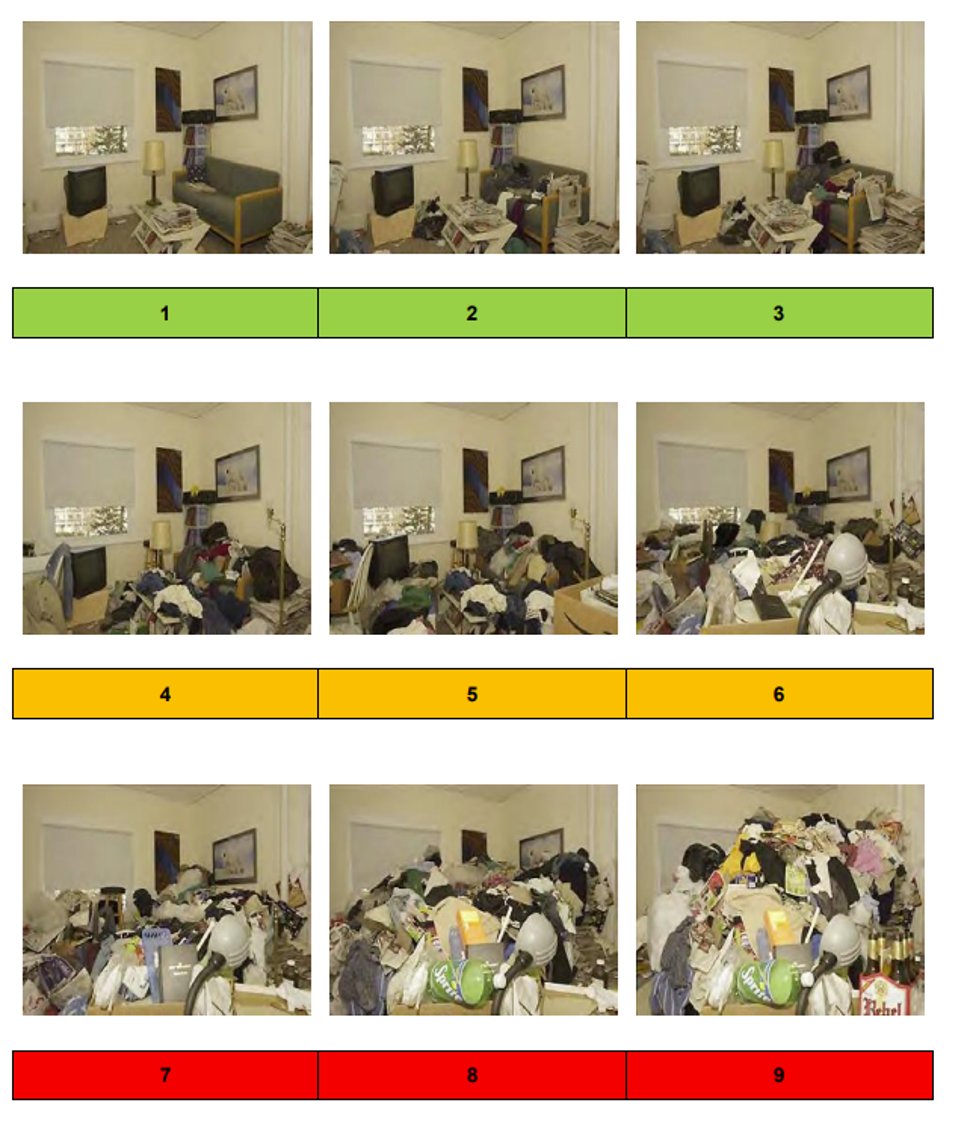
Clutter Image Rating
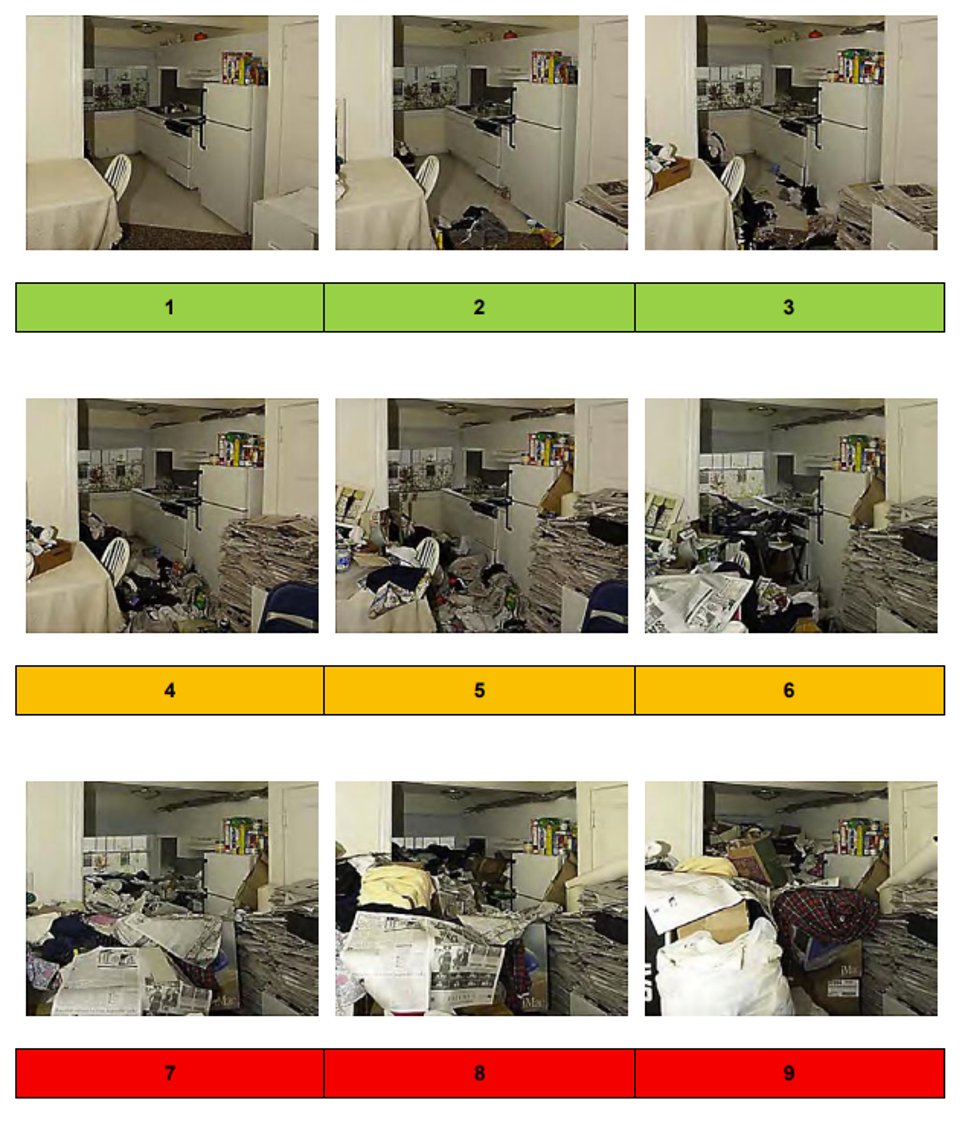
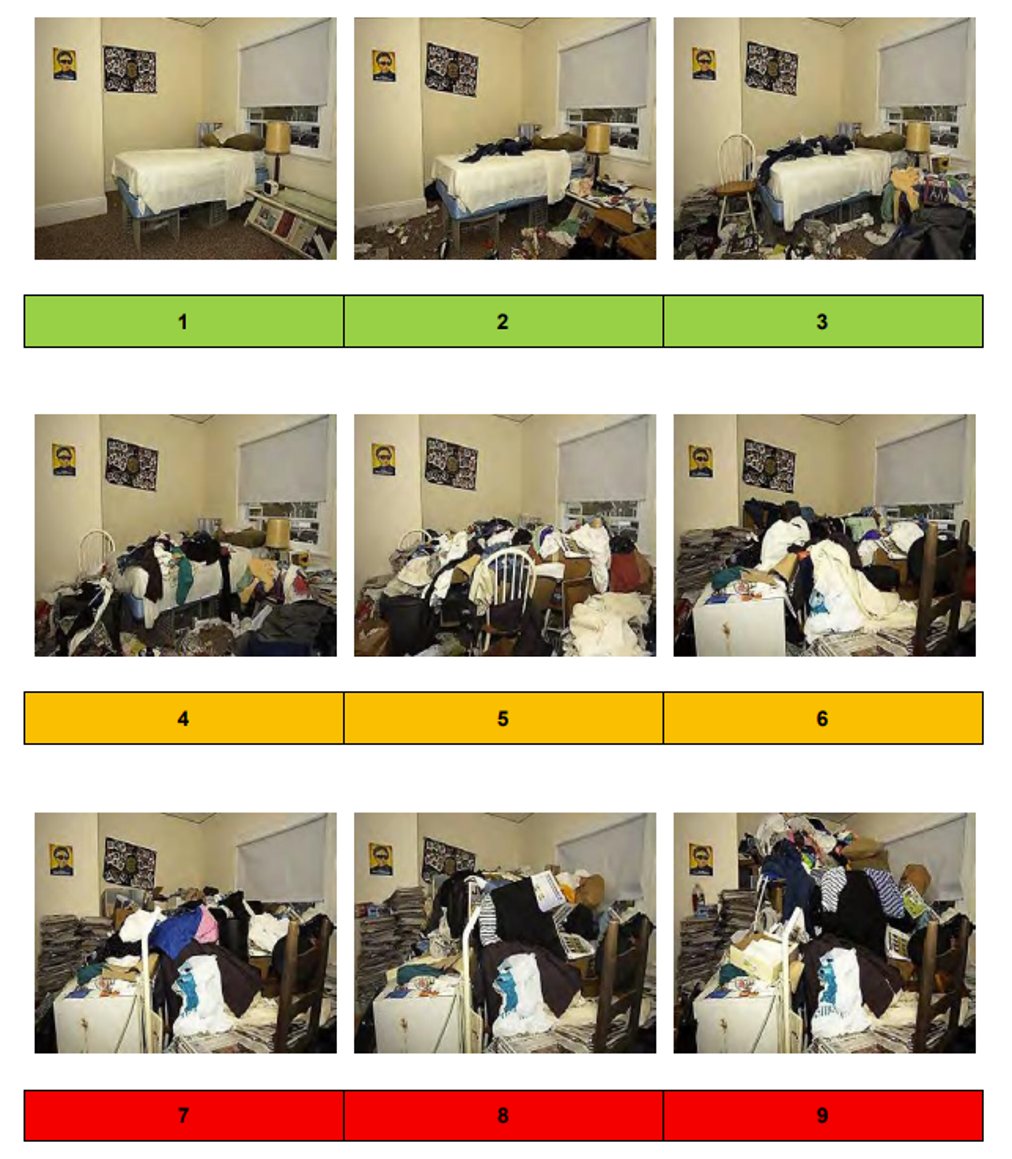
For cases involving hoarding, the Clutter Image Rating, can be a helpful resource to support decision making. However, the images should only be considered as part of a wider, holistic consideration of risks that takes into account past factors, background, circumstances and the persons understanding of their current risks.
The Clutter Image Rating[LA2] is recognised nationally and endorsed by the National Fire Chiefs Council (NFCC) Person Centred Framework (PCF), which supports Fire & Rescue Services to deliver a standardised and evidence-based approach to Home Fire Safety Assessments, as well as being used further in the Online Home Fire Safety Check (which is utilised by Greater Manchester Fire & Rescue Service and other services across the country).
Conversations about functionality can also help to jointly assess risk. Functionality refers to the number of rooms or spaces that can be used for the purpose for which they’re intended. Asking questions such as “How do you get hot water and lighting in here? How do you manage to cook food and keep yourself warm, especially in winter?” can be useful conversation starters to understand how the person perceives their living arrangements and any associated risks.
For cases that considered to meet level 3 of the Clutter Image Rating a referral for a Home Fire Safety Assessment (HFSA) must be considered. See earlier information about consideration of a Home Fire Safety Assessment referral for all properties where there is a fire risk to the person, family, wider community or responding firefighters.
Clutter image rating - how to use:
Select the photo that most accurately reflects the items in the room
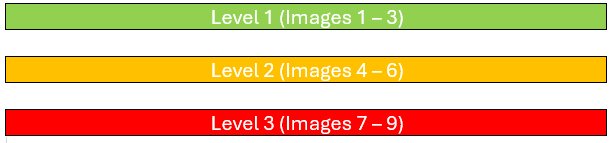
- Level 1 (Images 1-3) - require no specialist intervention
- Level 2 (Images 4-6) - may require some support for the adult and should be considered as part of a wider, holistic consideration of risk factors, background and understanding of current risks.
- Level 3 (Images 7-9) - requires specialist intervention including multi-agency working and a safeguarding referral
Kitchen:
Bedroom:
Living Room:
-
Useful Information and Contacts
Open or CloseUseful Information and Contacts
Contacts for Services
Trafford Council Adult Social Care
0161 912 5199
Trafford Council Children’s Social Care
0161 912 5125
Advocacy Focus
Greater Manchester Fire & Rescue Service (GMFRS)
Emergency number: 999
For Home Fire Safety Assessment referrals visit: Home Fire Safety Assessments GMFRS or telephone the GMFRS Contact Centre on 0800 555 815
For general prevention / fire safety in the home enquiries contact the Trafford & Stockport Prevention Team: preventionteamstockportandtrafford@manchesterfire.gov.uk
Greater Manchester Police (GMP)
Emergency number: 999
Trafford Carers Centre
0161 848 2400
TSAB Business Unit
For further information about this resource or the work of the Trafford Safeguarding Adults Board please visit our website Trafford Safeguarding Adults Board or email us at TSSP@Trafford.gov.uk
Practice Guides
Care Act 2014
Mental Capacity Act 2023
Mental Capacity – Trafford APP Resource
Mental Health Act 2007
Department of Health Mental Capacity Act Deprivation of Liberty Safeguards
Office of the Public Guardian (Mental Capacity Act)
TSAB Multi-agency Risk Management Framework
Adult Safeguarding – Trafford APPP Resource
Safeguarding Children – Trafford APPP Resource
-
Case Studies
Open or CloseCase Studies
To follow